The Complete Guide to Choosing the Perfect Motorcycle Racing Boots

Michael Thompson
10 March 2026
The Complete Guide to Choosing the Perfect Motorcycle Racing Boots
Introduction
When you’re pushing your motorcycle to its limits on the track, every piece of gear matters. But perhaps no single item is more critical to your safety and performance than your racing boots. At speeds exceeding 200 mph, MotoGP champions trust their feet to boots that represent the pinnacle of protective engineering. Whether you’re a weekend track day enthusiast or an aspiring professional racer, selecting the right motorcycle racing boots can literally be the difference between walking away from a crash and facing serious injury.
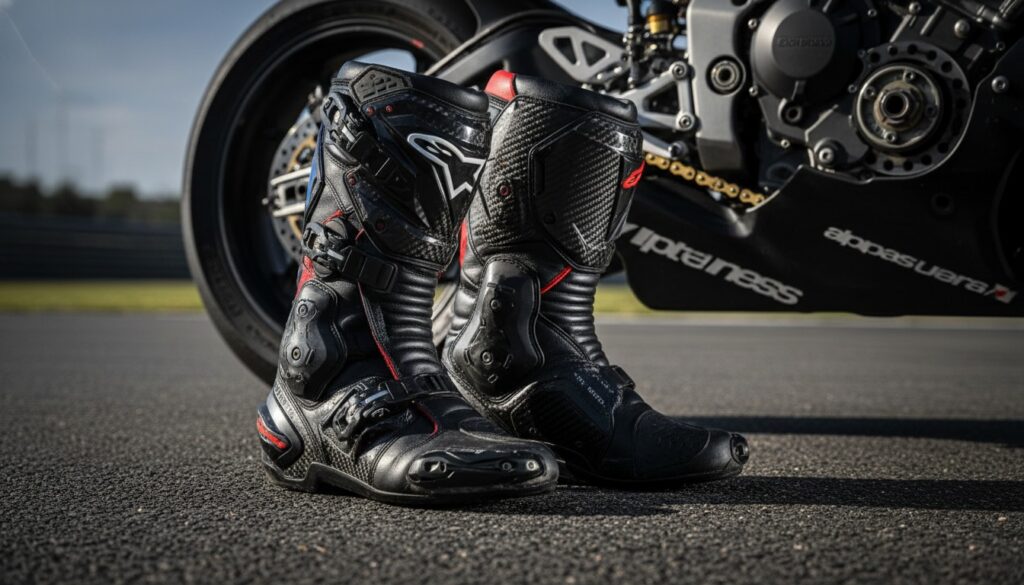
The modern motorcycle racing boot is a marvel of engineering, combining advanced materials, precision construction, and cutting-edge safety technology to protect one of the most vulnerable parts of your body. From the carbon fiber reinforcements that prevent crushing injuries to the specialized closure systems that keep boots secure during high-speed slides, every detail matters.
Understanding Racing Boot Construction and Safety Standards
CE Certification Levels
Not all motorcycle boots are created equal. The CE (Conformité Européenne) certification system provides a standardized way to evaluate protective gear:
- CE Level 1: Basic protection suitable for street riding
- CE Level 2: Enhanced protection required for serious track use
- FIM Homologation: The highest standard, mandatory for professional racing
- Superior abrasion resistance
- Natural breathability
- Excellent durability
- Requires break-in period
- Lighter weight
- Water-resistant properties
- Consistent thickness
- Ready to wear immediately
- Toe boxes
- Heel counters
- Ankle pivot points
- Shin guards
- Reduced control sensitivity
- Pressure points leading to numbness
- Compromised protection in a crash
- Premature fatigue
- Week 1: Wear for 30-minute sessions around the house
- Week 2: Extended wear during maintenance sessions
- Week 3: Short, low-intensity track sessions
- Week 4+: Full racing use
- Comfort for extended wear
- Good ventilation systems
- Replaceable components (toe sliders, heel guards)
- Reasonable price point without compromising safety
- FIM homologation
- Maximum protection levels
- Lightweight construction
- Custom fit options
- Advanced closure systems
- Remove and air dry completely
- Clean off debris and dirt
- Check for damage or excessive wear
- Rotate with backup pair when possible
- Deep clean with appropriate leather/synthetic cleaners
- Condition leather components
- Inspect all protective elements
- Check closure system functionality
- Any cracks in protective elements
- Compromised closure systems
- Significant sole wear affecting grip
- After any major crash impact
- Reduced comfort despite proper fit
- Excessive wear on high-contact areas
- Age-related material degradation (typically 3-5 years)
- Basic CE certification
- Standard construction materials
- Limited advanced features
- Suitable for occasional track use
- CE Level 2 protection
- Quality leather construction
- Good comfort features
- Ideal for regular track day riders
- FIM homologation available
- Advanced materials and construction
- Professional-grade features
- Maximum protection and performance
- Frequency of use: More riding justifies higher investment
- Safety value: Premium protection pays dividends in crash scenarios
- Durability: Quality boots last significantly longer
- Performance impact: Better boots improve comfort and control
“The difference between CE Level 1 and Level 2 isn’t just numbers on a label – it’s the difference between adequate protection and race-grade safety that can save your ankle in a 100mph slide.” – Professional Racing Safety Expert
Key Construction Elements
Toe Box Protection: The most critical area, featuring reinforced composite or carbon fiber construction to prevent crushing injuries during impacts.
Ankle Support: Advanced boots incorporate dual-pivot systems that allow natural movement while preventing dangerous hyperextension.
Heel Counter: Rigid heel construction prevents backward flex and provides crucial support during emergency braking situations.
Closure Systems: From traditional laces to advanced BOA dial systems, the closure method affects both security and emergency removal.
Material Technology: What Separates Premium Boots
Leather vs. Synthetic Materials
Full-Grain Leather:
Synthetic Microfiber:
Hybrid Construction: Premium manufacturers like Alpinestars combine both materials strategically, using leather in high-abrasion areas and synthetics where flexibility and weight savings matter most.
Advanced Protection Technologies
Carbon Fiber Reinforcement: Strategically placed carbon fiber elements provide maximum protection with minimal weight penalty. These components are typically found in:
Memory Foam Padding: High-density memory foam conforms to your foot shape while providing consistent protection and comfort.
Fit and Sizing: Getting It Right the First Time
Professional Fitting Guidelines
Proper fit is non-negotiable when it comes to racing boots. A poorly fitting boot can cause:
Sizing Considerations
Length: Your longest toe should have approximately 1/4 inch of space to the boot’s end when standing.
Width: The boot should feel snug but not tight across the widest part of your foot.
Heel Hold: Your heel should not slip when walking, but shouldn’t feel compressed.
Calf Accommodation: Racing boots extend higher than street boots, so proper calf fit is essential for comfort and protection.
Break-in Period
Quality leather racing boots require a proper break-in period:
“Never break in new racing boots during an important track day or race. The discomfort and potential for blisters can seriously compromise your performance and safety.” – Track Day Instructor
Performance Features for Different Racing Disciplines
Track Day and Amateur Racing
For enthusiasts focusing on track days and amateur competition, prioritize:
Professional and Semi-Professional Racing
Serious racers require boots with:
Specific Discipline Considerations
Road Racing: Emphasis on aerodynamics and lightweight construction
Supermoto: Enhanced toe protection for frequent foot-down situations
Endurance Racing: Superior comfort and ventilation for long stints
Maintenance and Care for Longevity
Daily Care Routine
After Each Ride:
Weekly Maintenance:
When to Replace Your Racing Boots
Immediate Replacement Indicators:
Gradual Replacement Signs:
Budget Considerations and Value Analysis
Price Ranges and What to Expect
Entry Level ($200-400):
Mid-Range ($400-700):
Premium ($700-1200+):
Cost-Per-Use Analysis
When evaluating racing boot investments, consider:
Conclusion
Choosing the perfect motorcycle racing boots requires balancing protection, performance, comfort, and budget considerations. The investment in quality racing boots pays dividends not just in safety, but in improved confidence and performance on track. Remember that boots are a critical safety system – they protect your feet, ankles, and lower legs while providing the precise control interface between you and your motorcycle.
Whether you choose the advanced engineering of Alpinestars’ flagship models or opt for a mid-range option that meets your specific needs, prioritize proper fit, appropriate safety certifications, and quality construction. Your feet carry you through life – protect them with the same dedication you show to your riding skills.
Take Action: Your Next Steps
Ready to upgrade your racing boot game? Start by visiting a qualified motorcycle gear retailer for professional fitting and hands-on evaluation of different models. Don’t rush this decision – take time to try multiple brands and styles to find your perfect match. Your safety and performance on track depend on making the right choice. Remember, the best racing boots are the ones that fit properly, meet your safety requirements, and inspire confidence every time you hit the track.