From MotoGP to Main Street: How Racing Technology Enhances Your Riding Gear

Michael Thompson
10 March 2026
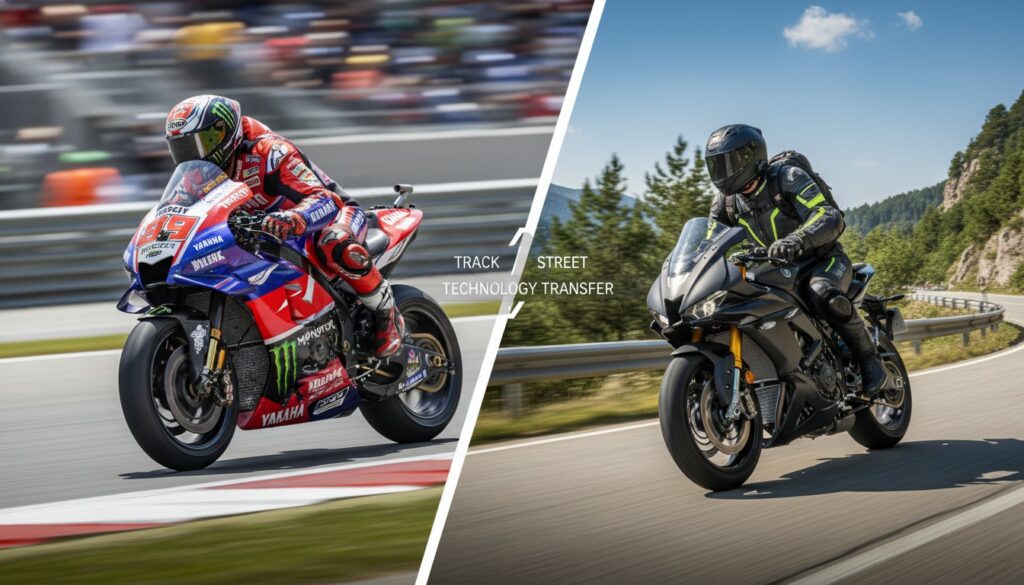
From MotoGP to Main Street: How Racing Technology Enhances Your Riding Gear
Introduction
Every Sunday, millions of motorcycle racing fans watch in awe as riders like Marc Márquez and Fabio Quartararo push the limits of human and machine performance at speeds exceeding 200 mph. What many don’t realize is that the cutting-edge protective gear safeguarding these elite athletes is the same technology that’s revolutionizing everyday motorcycle gear for street riders worldwide.
The transfer of racing technology to consumer products isn’t just marketing hype—it’s a proven development pipeline that has transformed motorcycle safety over the past three decades. Companies like Alpinestars, with their extensive MotoGP partnerships, serve as living laboratories where innovations are tested under the most extreme conditions before making their way to your local motorcycle dealership.
This technological trickle-down effect means that today’s recreational riders have access to protection levels that were once exclusive to professional racers.
The Racing Laboratory: Where Innovation Begins
MotoGP represents the ultimate testing ground for motorcycle gear technology. With riders regularly experiencing crashes at speeds that would be fatal without proper protection, every component must perform flawlessly under extreme stress.
Real-World Testing Under Extreme Conditions
The racing environment provides invaluable data that no laboratory can replicate:
- High-speed impact scenarios reaching 60+ mph slide speeds
- Temperature extremes from scorching asphalt to varying weather conditions
- Repetitive stress testing through multiple race weekends and practice sessions
- Immediate feedback from professional athletes whose lives depend on gear performance
- Impact forces and distribution patterns
- Abrasion resistance under various surface conditions
- Heat buildup and ventilation effectiveness
- Range of motion during aggressive riding positions
- 40% higher tensile strength compared to cowhide
- Superior flexibility for improved comfort and mobility
- Lighter weight without compromising protection
- Better tear resistance during slide scenarios
- Impact energy absorption: Maximum 9 kN transmitted force
- Multi-impact capability: Protection maintains effectiveness after repeated impacts
- Temperature stability: Performance consistency from -10°C to +40°C
- Carbon fiber reinforcement in high-impact zones
- Titanium inserts for superior abrasion resistance
- Memory foam integration for comfort without bulk
- Reinforced riding jeans
- Base layer systems
- Glove palm construction
- Boot liner materials
- Street riding jackets with pre-shaped arms for riding position comfort
- Motorcycle pants designed for natural leg positioning
- Gloves with curved fingers reducing hand fatigue
- Accordion-style leather panels at joints for flexibility
- Mesh ventilation zones that expand and contract with movement
- Elastic gussets in high-stress areas preventing tear-out
- Removable/upgradeable armor allowing riders to adjust protection levels
- Interchangeable back protectors from CE Level 1 to Level 2
- Modular ventilation systems for varying weather conditions
- GPS-based deployment using crash algorithms developed from racing data
- Mechanical tether systems providing reliable deployment without electronics
- Hybrid systems combining multiple activation methods for redundancy
- Chest and back protection preventing spinal compression injuries
- Shoulder and collarbone coverage reducing fracture risk
- Neck support integration limiting hyperextension injuries
- Impact detection sensors automatically alerting emergency contacts
- Temperature monitoring preventing heat-related issues
- Maintenance reminders ensuring gear remains in optimal condition
- CE certification levels indicating tested protection standards
- Coverage area mapping ensuring protection for your riding style
- Multi-impact capability for gear longevity and continued protection
- Size charts specific to riding position rather than casual wear
- Ventilation requirements for your climate and riding intensity
- Compatibility with other gear for comprehensive protection systems
- pH-balanced cleaners preventing material degradation
- Conditioning schedules maintaining flexibility and protection
- Storage considerations preventing cracking and deterioration
- Regular inspection protocols checking for impact damage
- Replacement timelines ensuring continued protection effectiveness
- Cleaning procedures maintaining hygiene without damaging materials
- Graphene-enhanced textiles offering unprecedented strength-to-weight ratios
- Self-healing materials that can repair minor damage automatically
- Phase-change materials providing adaptive temperature regulation
- Vehicle-to-gear communication allowing bikes to trigger protective systems
- Predictive crash detection using machine learning from racing data
- Real-time health monitoring tracking rider condition and fatigue levels
- Recycled carbon fiber applications reducing environmental impact
- Bio-based synthetic materials offering protection without petroleum dependence
- Circular economy approaches to gear lifecycle management
“The track doesn’t lie. When a rider goes down at 180 mph and walks away, we know our technology works. That same protection is what we bring to street riders.” – Alpinestars Development Team
Data-Driven Development Process
Modern racing gear development relies heavily on telemetry and crash analysis. Sensors embedded in racing suits collect real-time data on:
Revolutionary Materials: From Track to Street
The materials revolution in motorcycle gear has been driven primarily by racing demands, with many innovations now standard in consumer products.
Advanced Leather Technology
Kangaroo leather, once exclusive to racing suits, now appears in premium street gear. This material offers:
Synthetic Armor Evolution
Racing has accelerated the development of synthetic protection materials:
#### CE Level 2 Armor Standards
Developed from racing requirements, these standards now define consumer protection levels:
Textile Innovations
Racing-derived textile technologies have revolutionized street riding gear:
Aramid fiber integration provides cut and abrasion resistance while maintaining breathability. Originally developed for racing undergarments, these materials now appear in:
Fit and Ergonomics: Racing-Inspired Design Philosophy
Professional racers demand gear that moves like a second skin while providing maximum protection. This requirement has driven significant advances in ergonomic design that benefit all riders.
Pre-Curved Construction
Racing suits pioneered pre-curved sleeve and leg construction that reduces material bunching and pressure points. This technology now appears in:
Stretch Panel Integration
Strategically placed stretch panels, first developed for racing mobility, now enhance street gear:
Modular Protection Systems
Racing’s need for customizable protection levels has led to modular armor systems:
Advanced Protection Technologies
The most significant innovations in motorcycle safety have emerged from racing’s unforgiving environment.
Airbag Technology Evolution
What began as MotoGP-exclusive airbag systems has rapidly evolved for street use:
#### Electronic vs. Mechanical Systems
#### Protection Coverage Areas
Smart Gear Integration
Racing telemetry has inspired consumer gear with integrated technology:
Practical Applications for Street Riders
Understanding how racing technology translates to street riding helps riders make informed gear choices.
Choosing Racing-Derived Gear
When selecting street gear with racing heritage, consider:
#### Protection Level Assessment
#### Fit and Comfort Factors
Maintenance of Advanced Gear
Racing-derived gear often requires specialized care:
#### Leather Maintenance
#### Armor Care
The Future of Racing-Influenced Gear
The pipeline from racing to street continues to accelerate, with several emerging technologies poised to revolutionize motorcycle gear.
Next-Generation Materials
Research driven by racing demands is producing:
Connected Safety Systems
Integration of racing telemetry concepts with street riding:
Sustainability Initiatives
Racing’s push for lighter, more efficient materials is driving eco-friendly innovations:
Conclusion
The connection between MotoGP and your motorcycle gear represents more than just marketing association—it’s a direct technological lineage that has saved countless lives and prevented injuries on streets worldwide. From the advanced materials protecting Marc Márquez during a high-side crash to the ergonomic design allowing Fabio Quartararo to maintain control through demanding corners, these same innovations are working to protect everyday riders.
The key takeaway for street riders is that racing-derived gear represents proven technology tested under the most demanding conditions possible. When you invest in gear with genuine racing heritage, you’re not just buying protection—you’re accessing decades of development and real-world validation that no amount of laboratory testing can replicate.
As racing technology continues to evolve, street riders can expect even more advanced protection, comfort, and functionality to trickle down from the track to their daily rides.
Call-to-Action
Ready to experience racing-level protection on your next ride? Research gear from manufacturers with active MotoGP partnerships and look for CE-certified protection that meets your riding needs. Remember, the best gear is the gear you’ll actually wear—so prioritize fit, comfort, and functionality alongside protection levels.
Consider scheduling a gear fitting session at your local motorcycle dealer to experience firsthand how racing technology can enhance your riding experience. Your safety is worth the investment in proven, track-tested protection systems.